
Yard and Foundation Drainage in Gardner, Kansas

Rain that runs toward your house instead of away from it soaks the clay against your basement walls, and that wet clay is behind many of the bowing walls and basement leaks we repair around Gardner.

Before any drainage work

Why Drainage Around Your Foundation Matters

The clay under Johnson County homes swells as it soaks up water and shrinks as it dries out.

When the clay against your basement wall stays wet, it swells and pushes the wall inward. That is how basement walls crack and start to bow.

That same water then seeps in through those cracks and through the seam where the wall meets the basement floor.

Johnson County's residential foundation guideline says the ground should drop at least 6 inches in the first 10 feet away from the house. Sometimes that slope is not enough on its own, and the drainage needs to be improved in other ways.

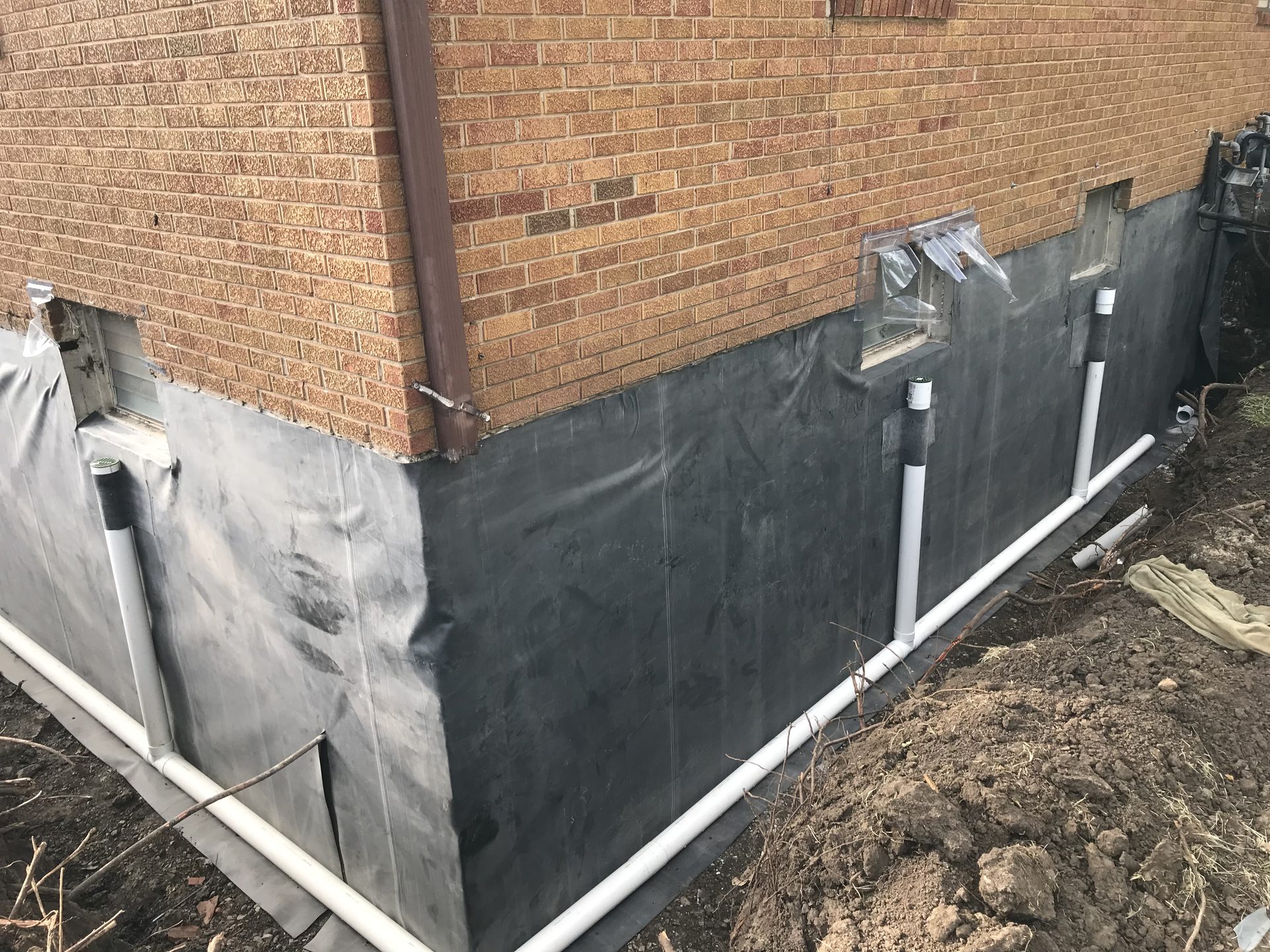
Drain pipe laid along the footing of a brick house with the foundation dug out

When rain has nowhere to go

Signs Your Yard Is Sending Water Toward Your Foundation

You do not have to wait for a storm to check your yard. Several of these signs leave marks you can find on a dry afternoon, as long as you know where to look.

Photo coming soon

Downspouts That Empty Against the House

Look at where each downspout ends. If it drops water right at the base of the wall, all the rain from that part of the roof lands beside your foundation.

That rain soaks into the clay right against your basement wall. You will often see a muddy patch or a washed-out spot under the downspout.

Photo coming soon

Puddles That Sit Beside the Foundation

Water still standing next to your house hours after the rain stops means the ground there sits lower than the yard around it.

That low spot fills up again with every storm, so the soil against your basement wall rarely gets a chance to dry out.

Photo coming soon

Ground That Slopes Back Toward the House

Stand at a corner of your house and look out across the yard. If the ground gets higher as it moves away from the wall, rain runs toward your foundation instead of away from it.

The side of the house that stays muddy longest after rain is usually the side with the wrong slope.

Photo coming soon

Mulch and Soil Washed Away Along the Wall

After a storm, look for bare soil, mulch washed out onto the lawn or a small trench worn along the house.

Those are signs that a lot of water is collecting beside your foundation. Whether it rushes past or sits and pools for hours, much of it soaks into the ground against your basement wall.

A Window Well That Holds Water

Check your basement window wells once the rain stops. If water is still standing in the bottom, the well is not draining.

That water can keep rising until it reaches the window, then leak into your basement around the frame.

A Sump Pump That Keeps Running After the Rain

Listen for your sump pump after a storm. If it keeps turning on hours after the rain has stopped, water is still finding its way into the pit.

That water is coming from the soil around your basement, so the ground against your walls is still soaked. A pump that runs that often also wears out sooner.

Photo coming soon

A Sump Pump Line That Empties Next to the House

Follow the pipe that carries water out of your sump pump. If it ends a few feet from the house, the water it pumps out lands right back beside your foundation.

That water soaks into the ground and drains back to the pit, so your pump ends up moving the same water again and again.

Seeing Water Pool or Run Toward Your House?

Call us as soon as you notice water pooling or running toward your house. If you already have a photo or video of it from a storm, send it along.

If you do not, call anyway. If it rains hard before your inspection, step outside for a minute and take a quick video of where the water collects and where your downspouts empty.

How we move the water

The Drainage Work We Do Around Your Foundation

Most yards need more than one fix, because water usually reaches the foundation from more than one direction. The roof, the slope of the yard and the sump pump can all be sending water to the same wall.

01

Regrading the Soil Around Your Foundation

When the ground slopes back toward the house, every heavy rain sends water straight to your foundation walls.

We bring in soil, build the ground back up against the house and shape it to the county's minimum slope or steeper. That sends the water out into the yard instead of down beside the wall.

02

Downspout Extensions

A single downspout can carry the rain from a big section of your roof, so where it ends matters more than most people think.

We extend each downspout far enough into the yard, past any low spot, that the water drains away from the house and cannot run back toward the foundation.

03

French Drains

Some yards hold water no matter how the soil is shaped, like a narrow side yard between two houses or a slope that sends a neighbor's runoff your way.

A French drain is a gravel-filled trench with a perforated pipe along the bottom. It catches the water underground and carries it to a part of the yard where it can drain away.

04

Sump Pump Discharge Lines

A sump pump only helps if the water it pumps out stays out.

We run the discharge line out past the point where the water could drain back to the house, so the pump is not moving the same water twice.

Sump pump installation

05

Window Well Drains

Johnson County's residential foundation guideline requires a drain in every window well.

If the well has no drain, we install one, and if the drain is clogged, we clear it. Rain then soaks down through the gravel instead of rising against the window.

Window wells and egress windows

Where we work

Serving the Kansas City Metro

We're based in Gardner, and we're a growing company. Right now we're expanding about 45 miles out in every direction, which covers most of the metro on both sides of the state line. Not sure if we make it out your way? Give us a call and ask.

Kansas Service Area
  • Gardner
  • Olathe
  • Overland Park
  • Shawnee
  • Lenexa
  • Leawood
  • Prairie Village
  • Merriam
  • Mission
  • Spring Hill
  • Edgerton
  • De Soto
  • Lawrence
  • Eudora
  • Baldwin City
  • Ottawa
  • Wellsville
  • Paola
  • Louisburg
  • Kansas City
Missouri Service Area
  • Kansas City
  • Belton
  • Grandview
  • Raymore
  • Peculiar
  • Harrisonville
  • Lee's Summit
  • Raytown
  • Independence
  • Blue Springs
Sage-green split-level home with limestone accents and warm porch lights at dusk

Free estimate

Schedule Your Free Drainage Inspection

A few details in the message box help us know where to look: which side of the house the water collects on, where your downspouts end and whether water ever shows up in the basement.

If you have a photo of the yard during a storm, mention it, and we will ask for it when we call you back.

Location
Gardner, KS 66030
Hours
Monday to Friday, 8:00 AM to 6:00 PM
Saturday and Sunday, Closed
When's the best time to contact you?

A photo of the crack, wall or wet spot helps us see what is going on before we come out. Up to 3 photos.

Texts & email

Prefer to talk? Call (913) 444-0115 during business hours.

Worth knowing

What We Want Every Homeowner to Know About Yard Drainage

Drainage problems rarely look like much until a wall cracks or the basement takes on water. These are the things we wish every homeowner knew before that happens.

A Dry Basement Does Not Mean Your Drainage Is Fine

If rain runs away from the house and the ground beside the foundation dries out within a day or so, the drainage is doing its job.

If water stands against the house after every storm, it is worth fixing even with a dry basement. That water soaks the clay against your foundation wall every time it rains, long before a crack or a wet spot shows up inside.

Caught at that stage, the fix is usually out in the yard. Wait until the wall cracks, and it can turn into a foundation repair too.

1 of 5